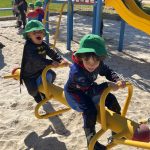
Sun Safety Guide: Smart Outdoor Play Tips to Protect Your Child
At Byford Childcare, we believe in nurturing happy, healthy children who thrive both indoors and outdoors. Outdoor play is a vital part of children’s development, encouraging physical activity, curiosity, social skills, and connection with nature.
However, in sunny Western Australia, where UV levels can be high year‑round, sun safety must always be a priority.
Ensuring safe outdoor play doesn’t mean avoiding the sun entirely; it means empowering children with good habits and providing the right protection so they can enjoy being outdoors safely.
Why Sun Safety Matters
Children’s skin is more sensitive to ultraviolet (UV) radiation than adults’, meaning they can get sunburnt in as little as 10 minutes without protection.
UV exposure during the early years significantly increases the risk of skin damage and skin cancer in later life.
Sunshine can also cause eye damage and heat stress if children are not adequately protected. These risks make a sun safety approach essential, not optional, whenever children engage in outdoor play.
Sun Safety Starts with Smart Scheduling
One of the simplest ways to reduce UV exposure is to be mindful of when children are outdoors.
Avoid peak UV times: In Australia, UV levels tend to be at their highest between 10 am and 3 pm.
Whenever possible, outdoor play is planned for early morning or later afternoon, when UV intensity is lower, and it’s cooler for active play.
Check the UV index regularly: A UV index of 3 or more means children need sun protection. On these days, protective measures are especially important—even if it’s cloudy.
By gently adjusting play schedules and using shade, we can significantly lower unnecessary sun exposure without limiting children’s opportunity for fun and movement.
Slip, Slop, Slap, Seek, Slide: SunSmart Basics
Effective sun safety is all about layering protections in a way that’s consistent and practical for daily use. Australia’s SunSmart approach encourages five key steps:
Slip on clothing:
Lightweight, loose‑fitting clothes that cover the shoulders and arms help protect the skin. UPF‑rated fabrics offer extra protection.
Slop on sunscreen:
Broad‑spectrum sunscreen with at least SPF 30 (SPF 50+ is ideal) should be applied 20 minutes before outdoor play and reapplied every two hours, especially if children are sweating or after water play.
Slap on a hat:
Hats with wide brims, bucket styles, or legionnaire hats that shade the face, neck, and ears are essential. Caps and visors don’t offer enough protection and are not recommended for extended outdoor play.
Seek shade:
Outdoor areas should be well‑shaded with natural trees and shade structures like pergolas or shade sails. Play equipment and activity zones are positioned to make the most of shade throughout the day.
Slide on sunglasses:
For eye protection, close‑fitting sunglasses that meet Australian standards can help shield sensitive eyes from UV damage.
These practices are not only effective but also help children internalise lifelong sun safe habits.
Shade: More Than Just Shelter
Shade is one of the most powerful tools in creating a sun-smart outdoor environment. Well‑designed outdoor spaces combine natural shade (trees and garden areas) with structural shade (sails, verandahs, shelters) to ensure children have plenty of cooler, safer play zones.
At Byford Childcare, we regularly assess and enhance shade coverage to match changes in sunlight patterns throughout the year.
Shade also enables children to remain outside even during warmer parts of the day when monitored and supported with additional sun protection and hydration.
Hydration and Heat Awareness
Sun safety isn’t only about UV protection. In hot weather, children can overheat quickly. Our educators monitor temperature, surface heat (like playground equipment), and children’s comfort to decide when it’s best to adjust outdoor play. Frequent water breaks and rest in shaded or cool areas are part of keeping children safe in warm weather.
Educators as Role Models,
Children learn best by watching the adults around them. That’s why our educators always model SunSmart behavior—wearing hats, applying sunscreen, seeking shade, and talking about why these steps are important. This modelling reinforces the importance of sun safety in a positive, reassuring way.
A Shared Commitment
Sun safety is a partnership between childcare, families, and children. We encourage families to support sun safety by providing hats and applying sunscreen before drop‑off during high UV months.
Together, we can ensure children enjoy the benefits of outdoor play while staying protected from the sun’s most harmful effects.
At Byford Childcare, we’re committed to creating environments where children are safe, joyful, and free to explore, with sun safety always top of mind.